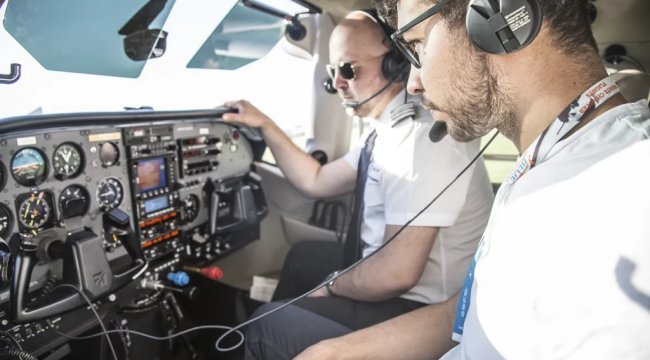
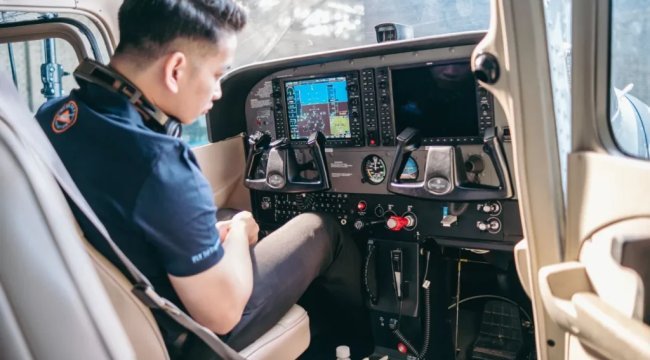
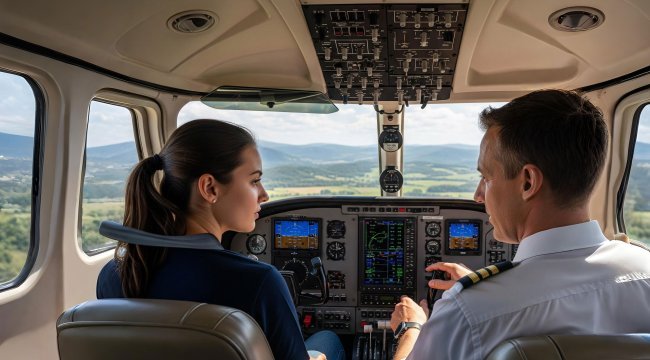
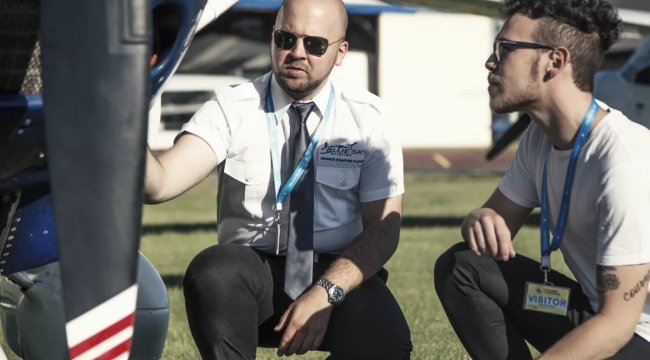
FI(A) – Flight Instructor (Aeroplanes) is intended for individuals interested in working as a flight instructor. An FI(A) flight instructor can be any pilot holding a Private Pilot Licence (PPL) or Commercial Pilot Licence (CPL) for aeroplanes, provided they have the appropriate flight experience and theoretical knowledge for the respective types of pilot training. This includes instruction for private pilot training, instrument flying, night flying, and even commercial pilot instruction. Upon successful completion of the training, the candidate obtains the FI(A) – Flight Instructor (Aeroplanes) qualification, with authorization to conduct PPL(A) and LAPL(A) training.
IR(A) is intended for both professional pilots as a necessary qualification and private pilots who seek maximum flexibility in their flights, aiming to fly safely and legally even in adverse weather conditions. Training to obtain the Instrument Rating – IR(A) can be undertaken by holders of a Private Pilot License PPL(A) or Commercial Pilot License CPL(A).
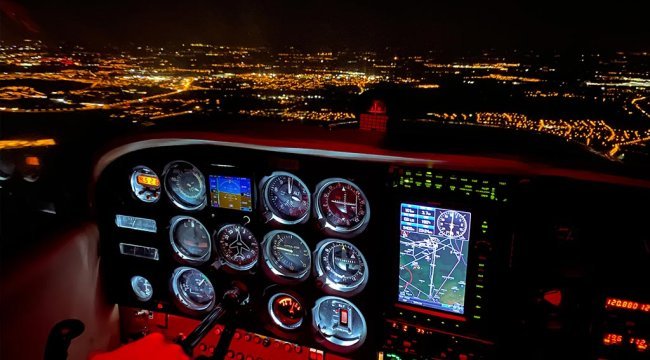
Night R-NIGHT(A) – a qualification for night flights (aircraft) is an essential qualification for a professional pilot, suitable also for private pilots. Graduates of the NIGHT(A) – qualification for night flights (aircraft) course will expand their knowledge and skills in flying at night.
The Private Helicopter Pilot License PPL(H) authorizes the pilot to conduct private, recreational, or sport flights in a helicopter for which they have a type rating, during the day and with ground visibility. The license holder is entitled to carry out flights only for private purposes; they can have passengers on board but cannot fly for remuneration. The Private Helicopter Pilot License is the basic license for all those interested in pilot training who want to become professional pilots.
Competency-Based Instrument Rating (Aircraft) – CB-IR(A) is an equivalent alternative to the Instrument Rating – IR(A). Applicants for the IR(A) qualification can utilize their previous training and experience in the CB-IR(A) course. Such previous experience can include flights with an instructor authorized for IR training or flights as a pilot-in-command under Instrument Flight Rules gained during, for example, IFR training/flights in countries outside EASA.
The private pilot license for airplanes PPL(A) authorizes a pilot to conduct private, recreational, or sports flights with a single-engine airplane during daylight and in visual meteorological conditions. The holder of the license is authorized to conduct flights only for private purposes, may take passengers on board, but cannot fly with financial profit. The private pilot license is the basic license for all individuals interested in pilot training who want to become professional pilots.
CPL(A) is the first milestone in a professional aviation career, meaning that you can now conduct commercial flights and make money out of it. Together with qualifications for night flying (NIGHT) and instrument flying IR(A), you can fly during both day and night under almost any weather conditions. To start the course, you need to hold at least a Private Pilot License PPL(A) and have a total flight time of at least 150 hours.
The Airline Transport Pilot License ATPL(A) is the highest level of pilot’s license. Only a pilot who has completed the ATPL(A) theory course at an authorized flight school and successfully passed the theory exams for airline transport pilots at the Civil Aviation Authority in any EU member state can obtain the ATPL(A) license. To start the course, one must hold at least a private pilot license PPL(A).
An introduction to how a flight operations department is organised and managed: the regulatory framework, postholder responsibilities, safety and quality management in flight operations, human factors, and efficiency. Participants work through practical cases from airplane and helicopter operations.
For organisations whose SMS is already running. This one-day recurrent course helps you check whether your SMS is effective, efficient and worth the resources it uses, find the weak processes, and plan improvements. Organisations that are new to SMS also use it to avoid common implementation mistakes.
A one-day introduction to safety management for ground handling. Ground service providers have to manage ramp, baggage, fuelling and turnaround risks in a systematic way. This course shows how the SMS works on the ramp and what each person's part in it is, with practical hazard-spotting and reporting exercises.
A five-day course on running an SMS at an aerodrome. Participants apply hazard identification and risk assessment to airside operations, work through shared risks with airlines, ground handlers and air navigation services, and connect the airport SMS to aerodrome certification and the State Safety Programme.
A structured 14-day pathway that combines four of our airline safety programmes into one learning journey: SMS for Airlines (5 days), SMS Implementation and Performance Control (3 days), Emergency Response Planning and Crisis Management (3 days), and the SMS Instructor Course (3 days). It is an Aviation Training Center of Safety Academia pathway. Each module can also be taken separately.
One-day management recurrent programme. Updates science and regulation, reviews FRM effectiveness and common failure modes, works through metrics and investigation examples, and refreshes the organisation's OE/OR programme and management action plan. Prerequisite: SFM-ME or equivalent. Assessment pass mark 70%.
Two-day management entry programme on designing and overseeing fatigue and stress risk within SMS/FRM. Day 1 covers ICAO/EASA framework, science for decision-makers, organisational stress factors and roster/ops hazards. Day 2 covers FRM components, data and SPIs, training oversight duties, a client-scenario capstone and assessment (70% pass). Aligned with ICAO Doc 9966 and EASA FRM direction.
Recurrent refresh of stress and fatigue awareness for front-line staff. Updates regulations and company policy, revisits science and countermeasures, reviews anonymised local/industry cases, and ends with a short check (70% pass). Prerequisite: SFM-OE or equivalent initial training.
Initial awareness training for front-line aviation staff on stress and fatigue. Covers sleep and circadian science, causes and effects of fatigue, stress in operations, personal countermeasures, and reporting. Designed to meet the awareness expectations in AMC1 ORO.FTL.250 for operative roles. Assessment: quiz with a 70% pass mark plus attendance.
A practical professional-development workshop for people who assess aviation English against the ICAO Language Proficiency Rating Scale (Doc 9835). Participants practise rating spoken samples, applying the six holistic descriptors, and recording consistent assessor judgements. This course prepares participants for assessor roles; it does not confer GCAA (or other competent authority) designation as a language proficiency assessor, and graduates are not automatically authorised to conduct official ELP tests. Formal designation remains with the competent authority.